> For the complete documentation index, see [llms.txt](https://loot-hunter.gitbook.io/loot-hunter/llms.txt). Markdown versions of documentation pages are available by appending `.md` to page URLs; this page is available as [Markdown](https://loot-hunter.gitbook.io/loot-hunter/gameplay-elements/items.md).
# Items
Items are minted through loot boxes purchased for 16$ in $LOOT, yielding NFTs with attributes such as rarity, item power, and type.
Rarity: common, uncommon, rare, epic, legendary.
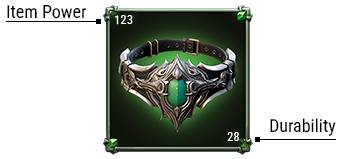
Item power: random value from 50 to 500.
| Rarity | Item Power | Drop chance |
| --------- | ---------- | ----------- |
| Common | 50-99 | 68.00% |
| Uncommon | 100-199 | 20.00% |
| Rare | 200-299 | 8.00% |
| Epic | 300-399 | 3.50% |
| Legendary | 400-500 | 0.50% |
Item type: random 1 of 10 that fits these item slots: Head, Wrist, Torso, Legs, Hands, Waist, Feet, Weapon, Ring, Amulet.
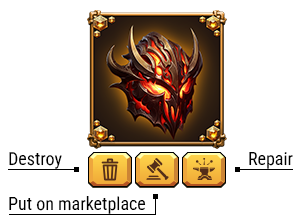
Durability: base value depends on item rarity. Every item loses 1 durability after a fight. If it reaches 0 you can repair it. The price of repair depends on item power. After repair it downgrades rarity and gets new random item power. For example if you repair Epic gloves, you will get Rare gloves with new item power value. Common items cant be repaired and instead are destroyed.
| Rarity | Durability |
| --------- | ---------- |
| Common | 14 |
| Uncommon | 28 |
| Rare | 42 |
| Epic | 56 |
| Legendary | 70 |
You can recoup 20% of an item's cost by destroying it, adjusted for remaining durability.